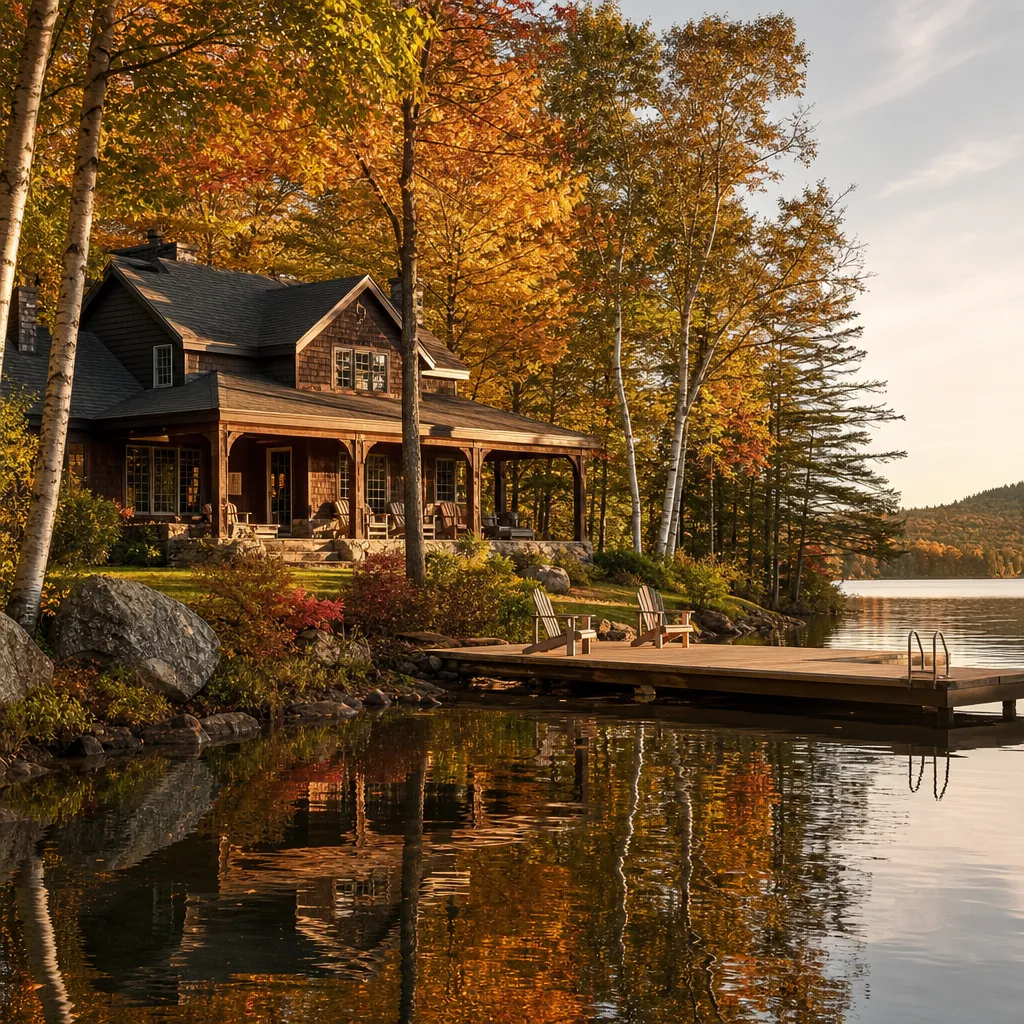
What Fall Reveals When Buying an Adirondack Second Home
Most people visit the Adirondacks in summer — and for good reason. The lakes are full, the trails are open, and everything about the region invites you to slow down and stay awhile. But if you're seriously considering buying a second home here, summer might actually be the least revealing time to visit a property.
Fall is different. When the leaves begin to turn and the seasonal crowds pull back, properties show their true character. What works and what doesn't becomes much easier to see. For buyers willing to tour in September and October, the season offers a level of clarity that summer simply can't match.
The Adirondack Second Home Market in Fall
Autumn marks a notable shift in the Adirondack real estate calendar. Summer buyers who didn't find what they were looking for may still be active, but the urgency that defines June and July tends to soften. Sellers who listed in spring and haven't yet found a buyer are often more engaged, and new listings sometimes appear as owners make decisions before winter arrives.
For buyers, this creates a window worth taking seriously. Competition may ease slightly, and the opportunity to tour thoughtfully — without competing weekend showings — is real. It's a season that rewards buyers who are prepared and clear about what they're looking for.
What Fall Actually Reveals About a Property
Water Access and Shoreline Conditions
Adirondack lake levels fluctuate across the seasons. By late summer and early fall, many lakes are at or near their seasonal low point. This is one of the most useful times to evaluate a waterfront property because what's beneath the dock — the lakebed, the depth near shore, the condition of the waterfront itself — is much easier to assess. A dock that looks perfectly placed in July may reveal shallow conditions, rocky areas, or soft spots that matter greatly for swimming, kayaking, or boating.
Walk the shoreline carefully. Note the condition of any existing dock structures, whether the bank is stable or eroding, and how the water transitions from shore. These observations are difficult or impossible to make when water levels are at their peak.
How the Property Handles Rain and Drainage
September in the Adirondacks typically brings increased rainfall. If you can tour a property during or just after a significant rain event, pay close attention to how the land drains. Watch for pooling water near the foundation, saturated low areas in the yard, or water running toward rather than away from the structure. Poor drainage is manageable in some cases — and expensive to correct in others. Seeing it firsthand is far better than discovering it after closing.
Road and Access Conditions
Many Adirondack second homes sit on private roads, seasonal roads, or town-maintained roads that vary significantly in condition and maintenance commitment. Fall — particularly after leaves begin to fall and before the ground freezes — gives you a realistic picture of what access looks like outside of peak season. Ask how the road is maintained in winter. Ask who is responsible for plowing and at what cost. For some buyers, a remote road is part of the appeal. For others, it's an operational challenge worth understanding fully before committing.
Heating Systems and Insulation Reality
As temperatures drop in the evenings and overnight, you get a genuine sense of how a property manages the cold. Ask the seller or listing agent for recent utility records. Pay attention to how the home feels during a cool morning — are there drafts near windows and doors? Does the heating system respond efficiently? For a property you plan to use in shoulder seasons or convert to year-round use, understanding the heating infrastructure now avoids surprises when it matters most.
Neighbor Activity and Seasonal Character
The Adirondacks attract a mix of year-round residents and seasonal visitors. By fall, many seasonal neighbors have closed their camps and returned home, which means the community you're buying into may look and feel quite different from its July version. If year-round community matters to you, ask questions about who stays. If privacy and quiet are priorities, fall gives you a clear preview of the off-season atmosphere.
Foliage, Views, and Natural Light
This one works in fall's favor. Peak foliage in the Adirondacks — typically mid-to-late October in many areas — is genuinely spectacular, and a property's setting comes alive in ways that are hard to appreciate from listing photos. At the same time, once leaves begin to drop, you'll see how much natural light the home actually receives and which views open up through the tree line. A lake view that's partially obstructed in summer may become panoramic by November. The inverse is also true — some properties rely heavily on foliage for screening and feel more exposed when trees go bare.
Questions Worth Asking Before a Fall Offer
Beyond what you observe during a tour, there are practical questions every Adirondack second-home buyer should ask before moving forward:
- How is the property winterized, and is that included in the sale? Systems for draining pipes, shutting off water, and protecting exposed plumbing vary significantly from property to property.
- What is the well and septic status? Request recent inspection records and ask when each system was last serviced or evaluated.
- Are there any seasonal restrictions on access or use? Some Adirondack roads and access points have seasonal closures or weight limits that affect when you can realistically reach the property.
- What is included in the sale? Many Adirondack properties are sold with furnishings, watercraft, or outbuildings. Clarifying what transfers saves negotiation friction later.
- What does the property cost to operate annually? Beyond mortgage and taxes, ask about insurance, association fees if applicable, road maintenance contributions, and typical seasonal closing and opening costs.
Timing Your Search and Offer
If you tour in September and October and find a property that meets your criteria, fall is a reasonable time to make a move. Sellers who are still active at this point in the year are generally serious, and positioning yourself before winter — when activity slows considerably — can work in your favor.
That said, don't let seasonal momentum push you faster than you're ready to move. An Adirondack second home is a significant investment and a long-term lifestyle decision. The right pace is the one that allows you to complete due diligence thoroughly: inspections, well and septic evaluation, title review, and a clear-eyed assessment of any deferred maintenance.
Working With a Local Expert
Buying a second home in the Adirondacks is different from purchasing a primary residence. Access, seasonality, infrastructure, and property-specific considerations require local knowledge that goes beyond what a listing description can convey. A real estate professional who understands this market — including how properties perform across seasons — is a meaningful asset throughout the process.
If you're considering an Adirondack second home and want to explore your options with someone who knows this region well, connect with Meghan to start the conversation. Whether you're just beginning to explore or actively searching for the right property this fall, Meghan can help you evaluate what you're seeing and guide you through a thoughtful purchase process.